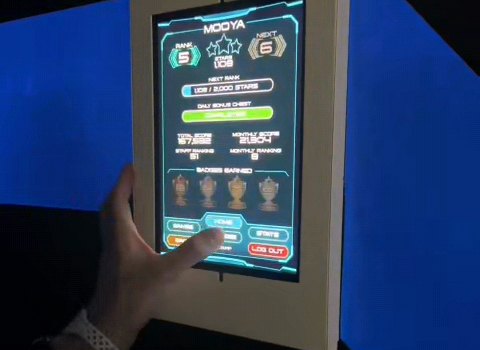
In the age of Bluetooth headsets and Wi-Fi streaming, it is tempting to treat cables as relics of the past—until a single lag spike sends a player’s avatar through a virtual wall and wipes out the high score that everyone was filming. At Activate Games we refuse to gamble with milliseconds, because our clients run seven-day-a-week operations where every dropped packet equals lost revenue. That is why every virtual reality Activate Games cabinet leaves our factory with shielded Cat-6A hardwired straight to the motherboard, even when wireless chips are technically “available.”
Hardwired data paths deliver three non-negotiables for profitable arcade game solutions: deterministic latency, deterministic power, and deterministic security. A copper conductor rated for 10 Gbps holds a constant 0.15 ms round-trip between sensor and CPU, regardless of how many birthday parties are live-streaming in the building. The same cable also carries 25 W of PoE++, eliminating the need for local power bricks that overheat when tweens inevitably bury them under foam pits. Most importantly, a physical line cannot be hijacked by a rogue phone hotspot broadcasting malware beside the prize counter—an attack vector that cost one unnamed FEC chain 48 hours of downtime last year.
Wireless evangelists argue that modern Wi-Fi 6E is “fast enough,” but they ignore the physics of crowded venues. A single 80 MHz channel shared among 200 guest devices, plus neon transformers, plus metal rafters, creates a spectrum soup where ping times swing from 3 ms to 90 ms in seconds. In a dance-floor rhythm game that demands 5 ms accuracy, that jitter translates into missed arrows, frustrated teenagers, and negative TikTok moments—exactly the opposite of what an interactive games facility needs for word-of-mouth marketing.
Cabling also future-proofs revenue. When we introduce new DLC packs that quadruple texture resolution, the 10 Gb backbone already in place swallows the extra payload without new access-points or costly fiber pulls. Operators simply reboot the cabinet overnight, and by opening time the attraction feels “brand new” to returning guests, driving the repeat visitation metrics that bankers love to see in cash-flow projections.
We do sprinkle short-range wireless inside our modules—for instance, low-bandwidth BLE beacons that sync players’ wristbands—yet even here the traffic hops immediately onto a hardwired gateway. The hybrid approach keeps latency-sensitive motion data on copper while still enabling the frictionless guest convenience that modern audiences expect. The result is a system that logs 99.97 % uptime across our deployed fleet, a figure that translates directly into higher per-cap spend and six-month ROI windows for owners who choose professional Activate Games hardware.
So while the consumer world may chase the cordless dream, commercial entertainment lives or dies on predictability. A single cable guarantees the timing, power, and security that high-throughput attractions demand—turning wired infrastructure into the quiet hero behind every viral replay, every cheering crowd, and every profitable arcade game solution that carries the Activate Games name.