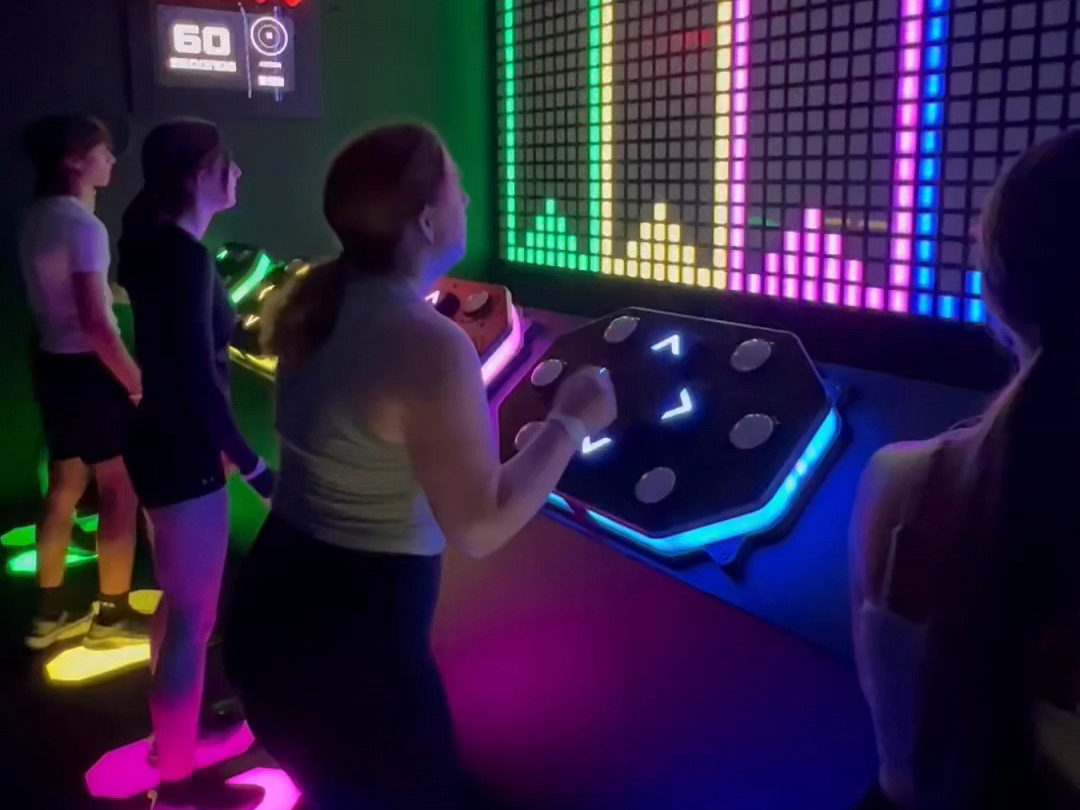
For years, corporate teams have sought ways to strengthen collaboration and communication outside the office. While traditional escape rooms offered a novel shift from trust falls and seminars, they often created a very specific—and sometimes stressful—type of collaborative pressure. Today, a new evolution is underway as companies increasingly turn to active gaming environments. These dynamic activate games offer a more inclusive, versatile, and measurable framework for professional development, establishing them as the premier choice for modern team building activities.
The shift is rooted in the core design philosophy of active gaming. Where escape rooms typically present a single, linear puzzle requiring specific logical solutions, active gaming arenas are built for multi-path success and physical engagement. Teams are presented with a series of challenges that test different skills: rapid communication in a reaction-time wall game, strategic resource allocation in a light-based puzzle, and synchronized movement on an interactive floor. This variety ensures that Indoor group activities for friends and corporate teams alike remain energized and that different personality types can shine in different scenarios. It moves the focus from “solving the one right answer” to “effectively adapting our collective strategy,” which is a far more relevant analog for the modern workplace.
A key advantage driving this evolution is the inherent scalability and data-driven nature of activate games. Escape rooms are often limited by physical space and a static narrative, making them difficult to customize for different group sizes or repeat visits. In contrast, a well-designed active gaming facility can use the same physical hardware to run countless software-based programs. A session can be tailored to emphasize communication, leadership, or creative problem-solving, and can be easily adjusted for groups of 8 or 80. Furthermore, many advanced systems provide post-session analytics, offering teams tangible metrics on their performance, reaction times, and collaborative efficiency. This transforms the event from a fun day out into a valuable development tool with clear takeaways.
The focus on active, full-body participation also addresses a growing corporate priority: employee wellness and engagement. Team building activities activate both the mind and the body, breaking the sedentary pattern of office life. This physicality releases endorphins, reduces stress, and creates a more playful, open atmosphere where hierarchical barriers naturally break down. The experience becomes less of a mandated exercise and more of a genuinely shared adventure, fostering stronger interpersonal bonds and more authentic communication than can be achieved in a stationary, high-pressure puzzle room.
Ultimately, companies are choosing active gaming because it aligns with contemporary work culture. It values adaptability over rote problem-solving, celebrates diverse contributions, and leverages technology to enhance human connection. By providing an engaging, inclusive, and customizable platform, activate games are redefining what effective team development looks like, offering a powerful and memorable experience that delivers real value for both the participants and the organization.