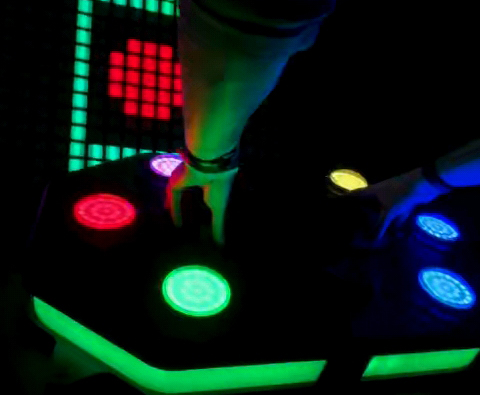
The modern classroom is expanding beyond its traditional walls, seeking dynamic environments where abstract STEM concepts become tangible and exhilarating. This is where the powerful fusion of education and entertainment—edutainment—finds a perfect platform. Interactive floors and arenas, such as those powered by activate games, are transforming from pure entertainment attractions into invaluable experiential learning labs, offering an ideal solution for memorable and effective school STEM field trips.
The core strength of activate games in an educational setting lies in their ability to make learning physically engaging and instantly interactive. Complex principles of physics, geometry, and computer science are no longer confined to textbooks but are embodied through play. For instance, a reaction wall game that lights up in sequence can teach younger students about patterns, cause and effect, and basic programming logic. A dynamic projection floor can transform into a living diagram of the solar system or a giant interactive map, where students collaborate to solve geography or biology challenges by physically stepping on continents or matching animal habitats. This hands-on, minds-on approach leverages kinesthetic learning, helping students internalize knowledge through action and collaboration, a hallmark of true edutainment.
For a field trip to be educationally valid, it must align with curriculum goals and foster measurable skill development. Activate games are uniquely suited to promote key STEM skills. Games requiring timed jumps to hit moving targets introduce concepts of velocity, trajectory, and timing. Team-based puzzle games that require sequenced steps foster computational thinking, logical reasoning, and collaborative problem-solving—skills directly transferable to coding and engineering. The immediate feedback provided by the games (through scores, lights, and sounds) creates a powerful feedback loop, encouraging experimentation, resilience, and iterative learning, as students naturally try to improve their strategies and outcomes.
The practical success of such an edutainment field trip hinges on seamless integration. Modern activate games platforms support this through customizable software. Educators can work with venue operators to tailor game modes and content to specific age groups or learning objectives, from simple color recognition for kindergarteners to complex physics simulations for high school students. This flexibility ensures that the activity is not just a fun diversion but a targeted educational extension of the classroom. Furthermore, the modular and robust design of professional equipment ensures safety and can accommodate the energetic nature of student groups, making logistics smooth for both schools and venues.
By embracing the edutainment potential of interactive floors, venues do more than host a field trip; they position themselves as essential partners in modern education. They offer schools an unparalleled opportunity to ignite student passion for STEM in a captivating, shared experience. Investing in this educational dimension allows family entertainment centers and similar venues to tap into the structured school group market, build community goodwill, and demonstrate the profound versatility of activate games as tools for joy, engagement, and meaningful learning.