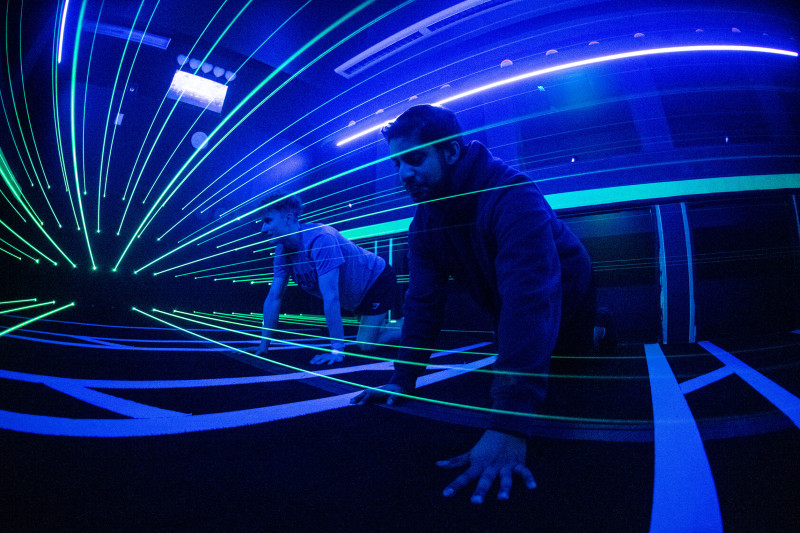
In the modern landscape of location-based entertainment, the physical health and safety of players have become as critical as the games themselves. As the demand for activate games continues to surge globally, venue operators are facing a unique challenge: maintaining pristine hygiene standards in environments defined by high-intensity, high-touch physical activity. For a facility to be successful, the engineering behind the equipment must prioritize sanitation without compromising on the immersive experience.
The Science of Non-Porous Materials
The foundation of a hygienic gaming environment lies in the molecular structure of the surfaces players touch. Traditional entertainment setups often used wood, low-grade plastics, or textured fabrics, all of which are porous. These materials act as microscopic traps for moisture, bacteria, and oils. In contrast, advanced activate indoor games are now engineered using high-density, non-porous polymers and specialized tempered glass.
By utilizing non-porous surfaces, equipment manufacturers ensure that sweat and contaminants remain on the surface rather than being absorbed. This is a critical distinction for activate challenge rooms, where players are frequently crawling, jumping, and pressing buttons. When a surface is truly non-porous, a simple wipe-down with a hospital-grade disinfectant can achieve a 99.9% kill rate for pathogens, a feat that is nearly impossible with traditional porous materials.
Engineering for Seamless Integration
Beyond the material choice, the physical design of the gaming modules plays a vital role in sanitation. “Hygiene-friendly engineering” focuses on eliminating “dirt traps”—the small crevices, sharp internal corners, and exposed screw heads where dust and grime tend to accumulate. Modern activate games hardware features radiused edges and seamless bonding techniques.
By creating a continuous surface between interactive panels and the room’s framework, engineers allow cleaning crews to sanitize an entire room in minutes. This rapid turnover is essential for high-traffic venues that need to maintain a busy schedule while ensuring every group enters a space that feels brand new. Furthermore, the integration of moisture-resistant seals protects the sensitive electronics housed within the activate challenge rooms, allowing for the use of liquid sanitizers without the risk of short-circuiting the hardware.
Durability Meets Decontamination
A common concern for operators is whether frequent chemical cleaning will degrade the equipment’s appearance or functionality. High-quality activate indoor games solve this through the use of UV-stable and chemical-resistant coatings. These industrial-grade finishes are designed to withstand thousands of cleaning cycles without “clouding” the interactive displays or making the surfaces brittle.
Investing in equipment designed with these standards doesn’t just protect the players; it protects the owner’s investment. Surfaces that are easy to clean are less likely to suffer from the long-term staining or odors that can plague lower-quality installations.
Building Trust Through Cleanliness
Ultimately, the success of a venue depends on the trust of its patrons. When players enter a space where the surfaces are visibly smooth, polished, and well-maintained, their confidence in the brand increases. By focusing on hygiene-friendly engineering from the manufacturing stage, activate games providers empower venue owners to market their facilities as premium, safe, and professional destinations. In the competitive world of active entertainment, the invisible engineering of a clean surface is often the most important feature of all.