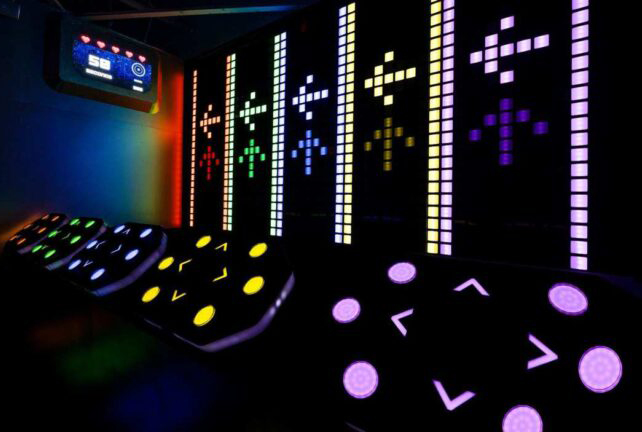
The global entertainment landscape is witnessing a dramatic shift. While massive theme parks and sprawling family entertainment centers once dominated the market, a new, leaner trend is taking over: the activate games micro-venue. Business owners and facility managers are increasingly looking for ways to maximize revenue per square meter, and high-tech, compact gaming environments are providing the perfect solution.
Redefining the Compact Gaming Space
Traditionally, creating an immersive physical experience required thousands of square feet. However, the evolution of activate indoor games has proven that engagement isn’t about size—it’s about the density of the experience. By utilizing modular technology and intelligent sensors, a “Micro-Venue” can deliver a full-scale physical challenge within a footprint of less than 50 square meters.
This model is particularly attractive for urban locations, shopping malls, and existing fitness centers where space comes at a premium. Instead of a single-purpose room, these compact setups offer a variety of rotating digital challenges, ensuring that players remain engaged through variety rather than just physical scale.
The Power of Activate Challenge Rooms
The core of this revolution lies in the design of activate challenge rooms. These are not merely rooms with games; they are reactive environments where the floors, walls, and ceilings interact with the players. By integrating pressure-sensitive floor tiles, laser grids, and interactive targets, a small room can transform into dozens of different gaming scenarios at the touch of a button.
For a venue owner, this means the “re-playability” factor is incredibly high. A player might spend thirty minutes in a 25-square-meter room and never play the same game twice. This efficiency allows operators to achieve a high throughput of customers without the overhead costs associated with maintaining a massive facility.
Why the Micro-Model Wins in Modern Markets
The shift toward activate games is driven by a consumer desire for “active entertainment.” Modern audiences are moving away from passive consumption, like cinemas, and toward social, physical competition. The micro-venue model fits perfectly into the modern lifestyle—it’s fast-paced, highly shareable on social media, and easily accessible.
Furthermore, from an installation perspective, these smaller footprints allow for faster deployment. Because the equipment is modular and designed for tight spaces, a facility can go from an empty shell to a fully functional gaming hub in a fraction of the time required for traditional construction. This agility allows businesses to respond quickly to market trends and start generating ROI almost immediately.
Future-Proofing Your Facility
As technology continues to advance, the boundaries between the physical and digital worlds will continue to blur. Investing in a micro-venue setup is not just about the current trend; it is about installing a flexible infrastructure. The hardware used in these activate indoor games—such as high-durability LED panels and sophisticated motion tracking—is designed to be updated via software. This means your “Micro-Venue” can evolve with new game releases and difficulty levels without needing a physical renovation.
In conclusion, the “Micro-Venue” model proves that you don’t need a stadium to create an unforgettable experience. By focusing on high-quality activate challenge rooms and smart spatial design, operators can turn underutilized small spaces into high-performance entertainment hubs. Whether you are looking to supplement an existing business or launch a standalone boutique gaming center, the future of active play is compact, digital, and incredibly efficient.